Weight Loss and the World Wide Web


Of all the talks I’ve given, none scared me more than my presentation at the 2024 performance.now() conference. The talk was ostensibly about third-party scripts and web performance, but it also touched on a topic embarrassing to me—my weight—and equated it to what I was observing on the web.
Two recent events reminded me of this talk, how much has changed for me since then because of GLP-1, and how the same can’t be said for the web.
Struggling to get healthier
I was in a strange place in Fall of 2024. We had spent three and a half years taking care of my father before he passed in October 2023. He had suffered a stroke right before COVID that left him bedridden with a tracheostomy. A respiratory pandemic is difficult enough to survive without a direct path to your lungs.
To keep him safe, we took him into our home and became his nurses, respiratory therapists, PTs—anything necessary to keep him alive.

Taking care of him was all-consuming. As a result, our own health suffered. I gained a lot of weight and had a couple of health scares that sent me to the ER. I was pre-diabetic and while my bloodwork wasn’t dangerous yet, it was heading the wrong direction.
After my father passed, I was determined to lose weight and get into shape. I didn’t want to put the same burden on our kids that my father had on us.
So I set up a home gym in the space that had previously been his hospital room. I started rowing and lifting weights daily for the first time in my life. I purchased an underdesk treadmill so I could exercise while working.

I saw some improvements. I was stronger than I had ever been and had lost some weight, but I had plateaued. I wasn’t losing weight any more. I felt stuck.
Our clients were stuck too
Around this same time, I was conducting performance audits for some of our clients. I love helping organizations make their websites run faster so working on performance audits is usually one of my favorite tasks. But in these cases, the audits were frustrating.
Like the vast majority of websites we see in the wild, the biggest performance problems for our clients were due to third-party scripts. The good news was that I could identify which scripts caused the most issues. I could even show how much faster their site would be if they removed the scripts.
The bad news was that even if they wanted to, our clients couldn’t remove the scripts. In one case, the client was using Bolt for their cart and checkout. Bolt was a massive React app that weighed in at nearly 1MB. It slowed down the most critical parts of an ecommerce funnel. But they couldn’t remove it without breaking core functionality.
Ozempic and other GLP-1s
It didn’t seem to matter how much I worked out. I wasn’t losing weight. So I started researching Ozempic and other GLP-1s.
I was intrigued by the way Chris Coyier and Paul Ford described their own experiences. Paul Ford wrote:
Where before my brain had been screaming, screaming, at air-raid volume—there was sudden silence. It was confusing. Would it last?
I went alone that night to a Chinese restaurant, the old-school kind with tables, and ordered General Tso’s. I ate the broccoli, a few pieces of chicken, and thought: too gloopy. I left it unfinished, went home in confusion, a different kind of sleepwalker. I passed bodegas and shrugged. At an office I observed the stack of candies and treats with no particular interest.
Decades of struggle—poof.
Before I started using GLP-1, it had already changed me. The success of these drugs made me reassess my relationship to weight loss. If the food noise in my head could be tamed with medication, then perhaps my weight wasn’t a personal failing.
I wasn’t weak. I was just wired in a way that caused my brain to think I was hungry when I wasn’t. And I could be rewired.
What about a GLP-1 for the web?
As preparation for my talk heated up, I found myself researching third-party scripts during the day and GLP-1s at night. It’s no surprise I started to see parallels between them.
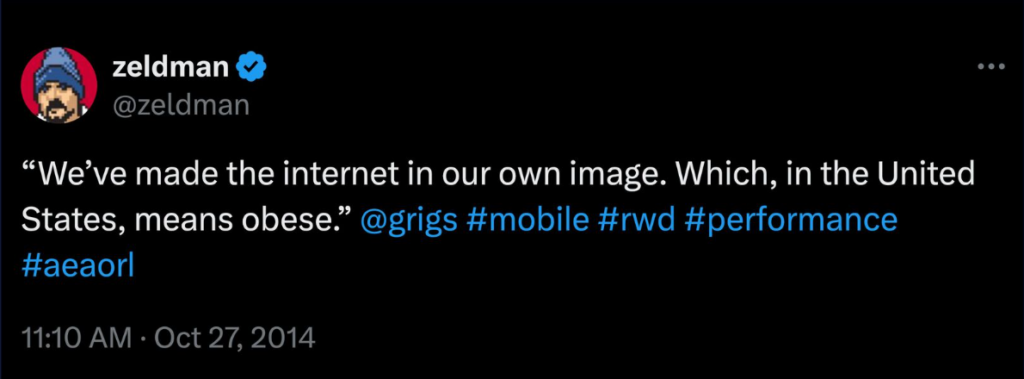
Most website owners know how important performance is for user experience and how it impacts conversions and revenue. They want a fast site.
And yet websites continue to grow in size. Even ecommerce sites which have a strong financial motivation to fix performance issues get larger every year on average.
I knew I needed help to get unstuck. Maybe my clients did too?
I started looking for something akin to a GLP-1 for the web. I knew it wouldn’t solve every problem, but maybe a little boost would help. Was there some way we could rewire the web like I hoped GLP-1 would rewire my brain?
This became a focal point of my research. I looked into Partytown which tries to move third-party scripts off the main thread and onto a web worker where they will have less impact on the user. I explored Cloudflare’s Zaraz product which attempts something similar using Edge Workers. I revisited server-side Google Tag Manager for the umpteenth time hoping that this time it seemed more likely to work for our clients.
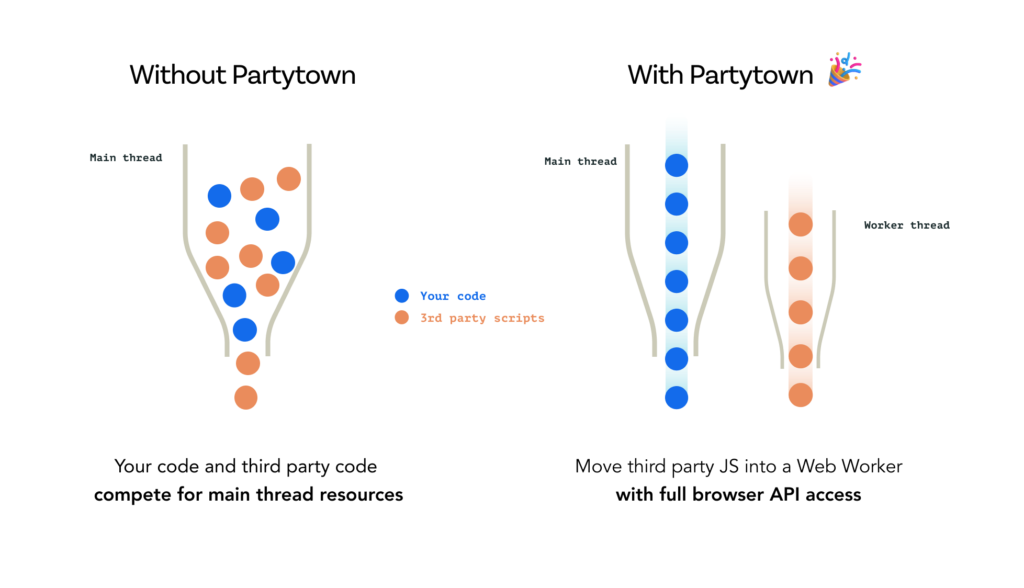
But every one of these solutions had significant drawbacks. They are all difficult to implement. I wasn’t certain how I could tell if third-party scripts were still working, especially when we don’t usually have access to the dashboards for these services.
That’s not to say that some people aren’t having success with them. Julian Jandl shared how they’ve been using Partytown successfully at performance.sync() 2025. I think it is easier for internal teams to experiment with solutions like this than it is for our clients to sign up for something unproven.
If I was working on the talk today, I’m sure someone in the audience would ask if AI could help. If AI will cure cancer, surely it can solve web site bloat.
Unfortunately, most AI-generated websites seem to have performance problems. Tim Kadlec points out that JavaScript bytes on the web have exploded since May 2025—the month when Claude Code, Github Copilot Coding Agent, and Cursor AI agents launched.
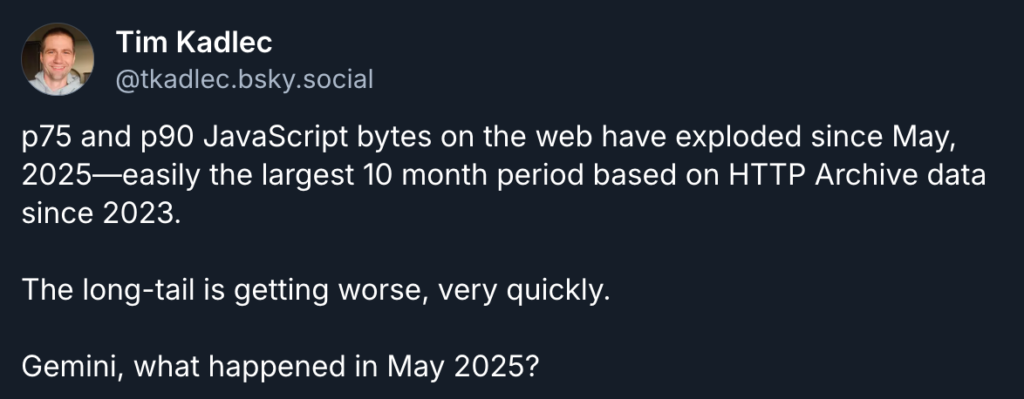
I suppose it doesn’t have to be that way. In theory, you can add enough context or constraints to get a performant experience out of AI, but that would require people to prioritize it. It doesn’t happen by default. So I don’t see AI solving the web’s performance problems (or cancer) any time soon.
Video of my presentation
While I didn’t find a GLP-1 for the web, I’m still proud of the talk. There are many practical suggestions on how to analyze and manage third-party scripts.
I recommend watching the talk, but I’ll admit I have a hard time doing so. I was going to send it to a client last week and was shocked at how big I look in the video.
My Tirzepatide journey
I nearly started GLP-1 before the performance.now() conference, but I was worried about potential side effects before the trip. I didn’t want indigestion during the conference or after it when my family was meeting me for a vacation.
After we returned home, the holidays took precedence. In early 2025, I read about the FDA removing some GLP-1s from the shortage list which meant compounding pharmacies could no longer make it. Compounding pharmacies were providing affordable alternatives. I knew I couldn’t afford the full price, and my insurance wasn’t going to cover it.
So I gave up for a bit until a friend who I hadn’t seen in a few months visited. I was stunned by his transformation. He was on Tirzepatide (a different GLP-1) and looked like an entirely different person.
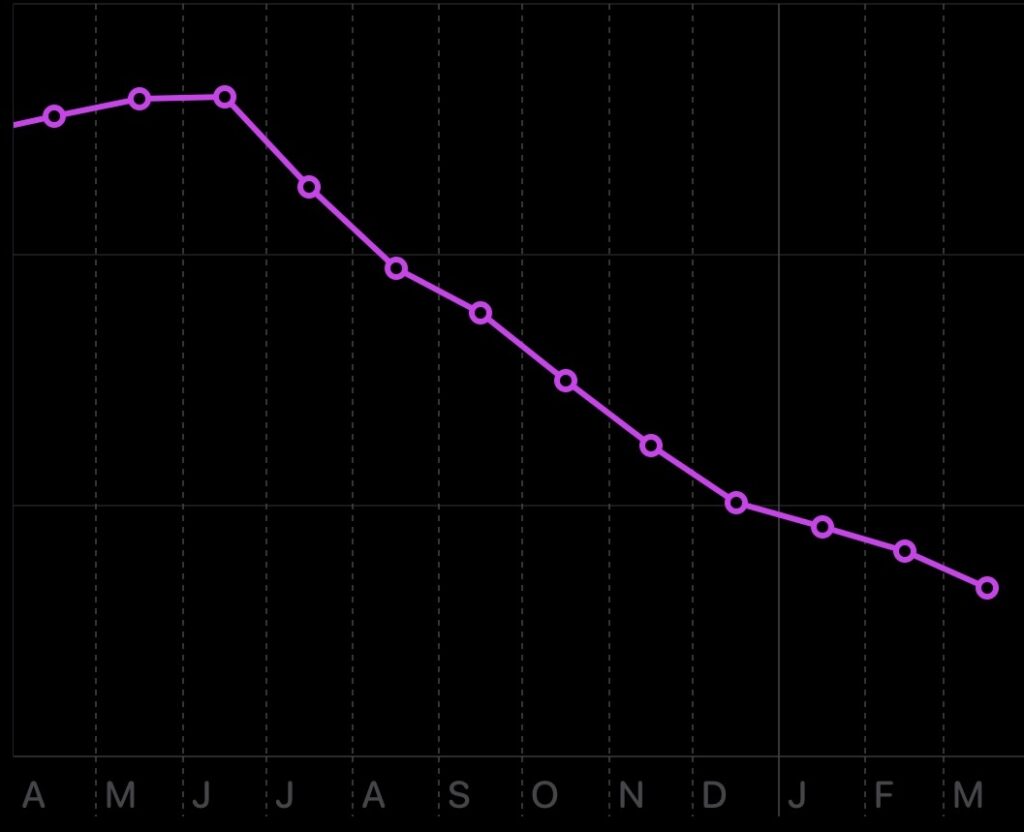
His experience inspired me to give it another try. I took my first shot of Tirzepatide on June 27, 2025. I still have more to go, but I’ve lost 50 pounds so far. I’m at the lowest weight since college. I can now see the evidence of my daily workouts. And most importantly, my blood work is trending in the right direction.

The 49MB Web Page
Unfortunately, the story for the web over the same period hasn’t been great. One of the triggers for revisiting my presentation was this excellent article by Shubham Bose examining a 49MB New York Times article.
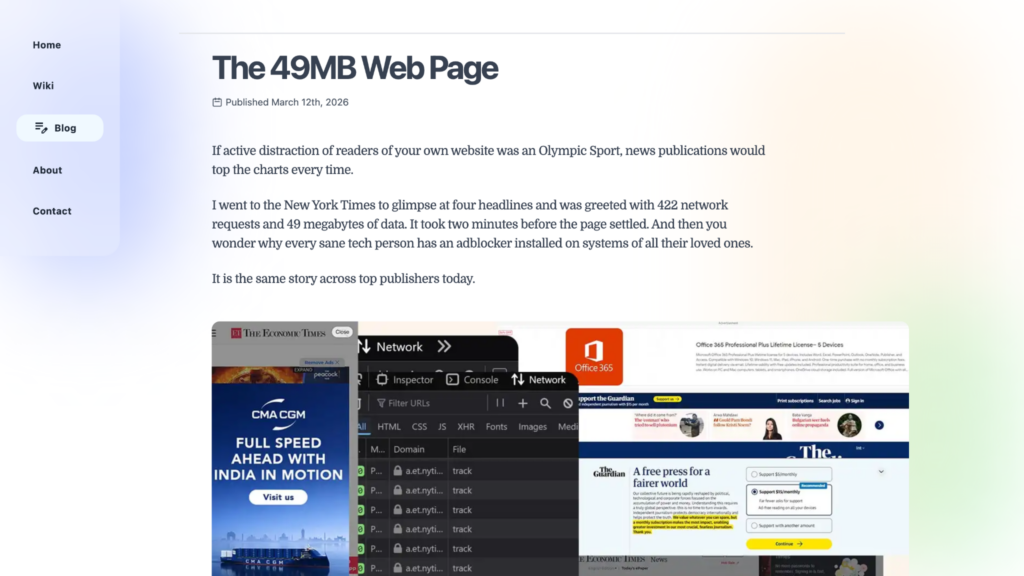
Bose points out all of the privacy and user hostile code being used on the web these days. Most of this code comes from third-party scripts.
And maybe it’s a bit of silly numerology, but I couldn’t help but feel some kinship to this random NYT article. The page weighs 49MB. I’ve lost 50 pounds.
I wish I could share some of my Tirzepatide with these pages.
Open for discussion
I like helping people build faster websites, but I can only help so many clients at a time. It’s a drop in the bucket compared to the direction the web is headed. It feels as futile as dieting.
The main purpose for my talk was to spur discussion in the web performance community because I believe only collective action on third-party scripts can make a difference. I don’t know if we will be able to find some miracle GLP-1-like solution for third-parties. But maybe we can make it easier for people to learn which third-party scripts are better from a performance standpoint. That would be a good start.
In a similar vein, I’d like this article to be the starting point for discussion. If you want to brainstorm ways to handle third-parties and make the web faster, I’d love to hear about it—particularly if you’ve successfully used PartyTown, Zaraz, or server-side GTM.
I’m also open to talking about weight loss and my experience with Tirzepatide. I’m keenly aware of how difficult it can be to talk about these things. I’ve been too embarrassed to do so for years. But Tirzepatide has made a huge difference for me so I’m happy to share what I’ve learned.
So I’m open for discussion. You can ask me anything. You can reach out publicly or privately. I’m happy to talk about either topic or anything else that may be on your mind. We’re all in this together.
P.S. We’re looking for projects. Please spread the word.
Jason Grigsby is one of the co-founders of Cloud Four, Mobile Portland and Responsive Field Day. He is the author of Progressive Web Apps from A Book Apart. Follow him at @grigs.