How Do We Write About AI in Web Development?

I’ve always been a big believer in blogging as a tool to share what you learn with the community. When I was getting started, I benefited enormously from Eric Meyer, CSS Tricks, and yes, even Cloud Four. I loved participating in the community, and have been a vocal advocate of blogging at every company I’ve worked for. Every time I tackled a tricky challenge, learned something new, or just thought I had a way to explain something that might help others, I couldn’t wait to write about it.
Lately, I’ve really struggled with motivation to write. Part of that is just the Bad Times™ and lingering sense of apocalyptic doom that I think we all struggle with sometimes. Part of that is that I’m going through a period of slight burnout in every area of my life — something I’ve been through before and know will pass as I make changes to shift things in a more sustainable direction.
But the biggest reason is AI. The single biggest change to our industry since, well, honestly, since our industry started. It’s enormous, pervasive, and rapidly changing. This should excite me! I came up in the heady days of post-tabular adoption of CSS for layout. I loved writing about the rapid pace of change in browser support as floats gave way to flexbox and grid. So… why can’t I write about how AI is affecting my career?
I think there are two problems: Firstly, I’m worried about how others in the community will react, especially people I look up to. Secondly, AI models are changing so rapidly that things I would have written about months or even weeks ago are now outdated.
Let’s tear the bandaid off. I use AI coding tools, mostly Claude, as part of my daily workflow now. I’m a latecomer to the party. About six months ago, my manager Megan, who runs an AI meetup here in Portland, was listening to me share some concerns about AI, and asked me point-blank: “Have you ever actually used it?” When I admitted I hadn’t, she suggested that I should dip my toes in, seeing if Claude could help me with some of those tasks that tend to be deprioritized, like code cleanup and test coverage.
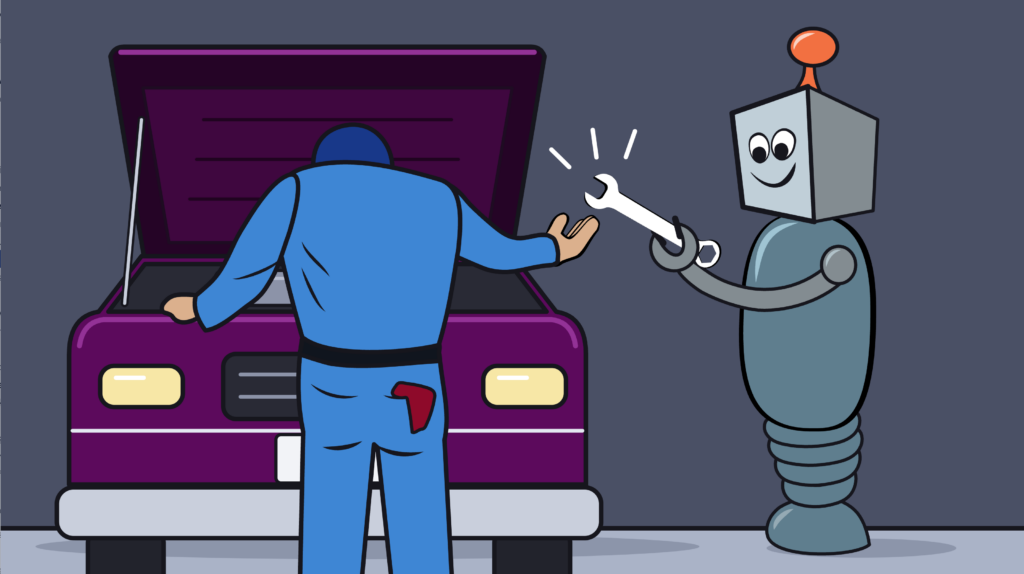
It was jaw-dropping. I’d expected AI to feel like working with a remote junior dev who needed a lot of hand holding, and it wouldn’t really save me any effort or time. Instead, I found what felt like a talented, enthusiastic, and deeply knowledgeable coding partner who lacked real-world experience and big-picture understanding of the projects I was working on. Providing context and making judgement calls is exactly where a senior developer like myself provides value, whether working with a human or an AI. I give Claude a clear description of a task, usually as a GitHub issue, and it delivers a PR to review. I point out issues in the code, or find some rough edges in the browser that it missed, and get it to make some followup changes until the result meets our standards of quality.
And more than that, Claude was able to take on some tasks I’d been beating my head against for literally years. I’m not too proud to admit it. One particularly hairy issue involving GraphQL minification to improve our Fastly hit rate got knocked out in an afternoon. I had opened that ticket three years ago, and attempted it several times since! In short order, Claude was helping me tackle complex features in code bases I’d previously found intimidating or struggled with.
But… my normal instinct to share was blunted. Across social media, I was watching the people I respect split into two polarized extremes: Devs who are all-in on AI, and devs who are vehemently opposed to it. I read everything they write, and I understand! I share the ethical concerns about the way AI models were trained on everything without permission. I can see the impact of AI on creative fields like music and art. I watch tech companies brute-forcing data centers into communities who don’t want them by using their armies of lawyers to overwhelm the limited defenses of small towns.
I’m not here to hand-wave those concerns away. They’re legit, and I share them. I even have my own concerns about how any junior devs can possibly find jobs in a market beset by constant layoffs where every job description requires years of experience they simply can’t get.
I don’t know how to square the circle of serious and valid concerns raised by these tools with the fact that they are experiencing widespread adoption by our competitors and customers.
I want to share how AI is changing my work for the better, but I genuinely worry about the reactions of people in the industry that I look up to, who are viscerally opposed to AI usage. Will posting about AI cost us clients? The respect of our peers?
And then, even on the days when I convince myself this is worth writing about, despite those concerns, I run into another brick wall. In just six short months of using AI as part of my daily workflow, the way I use it has shifted significantly several times. A blog post I would have written in April would feel laughably dated today.
I don’t want to get too into the weeds here, but the short version is that the capabilities of AI even in just a few months have dramatically improved, to the point where a lot of the tooling and structure I needed when I started is no longer necessary.
And then add the classic fears of “what do I have to add to this conversation?” and “surely, the way I’m using this tool isn’t worth writing about.” I know how to push through those, but they’re still there. I worry that I’ll write something about how I use AI and get laughed out of the room because I didn’t know something that everyone else knows. “Hey check out this baby who doesn’t even know how to floop the pig!”
In the end, I’m writing this up because of a bit of advice I received years ago. “If you learned something, even if you think it’s obvious, someone else will probably benefit from it.” In the same vein, I’m sure I’m not the only one struggling with these feelings around the rise of AI.
I don’t have any brilliant insights to share here, except to say this: I’m using AI as part of my daily workflow. I have complicated feelings about it, but I can’t deny that it’s been incredibly helpful. I respect anyone who draws a hard line around these tools, and I hope you’ll extend me grace as we explore how AI affects our work moving forward.
Scott Vandehey is a front-end architect and CSS specialist with over 25 years of experience. He curates Friday Front-End, sharing front-end development tips and links every day. He is the author of “How to Find a Better Job in Tech.” Follow him on mastodon or bluesky.
